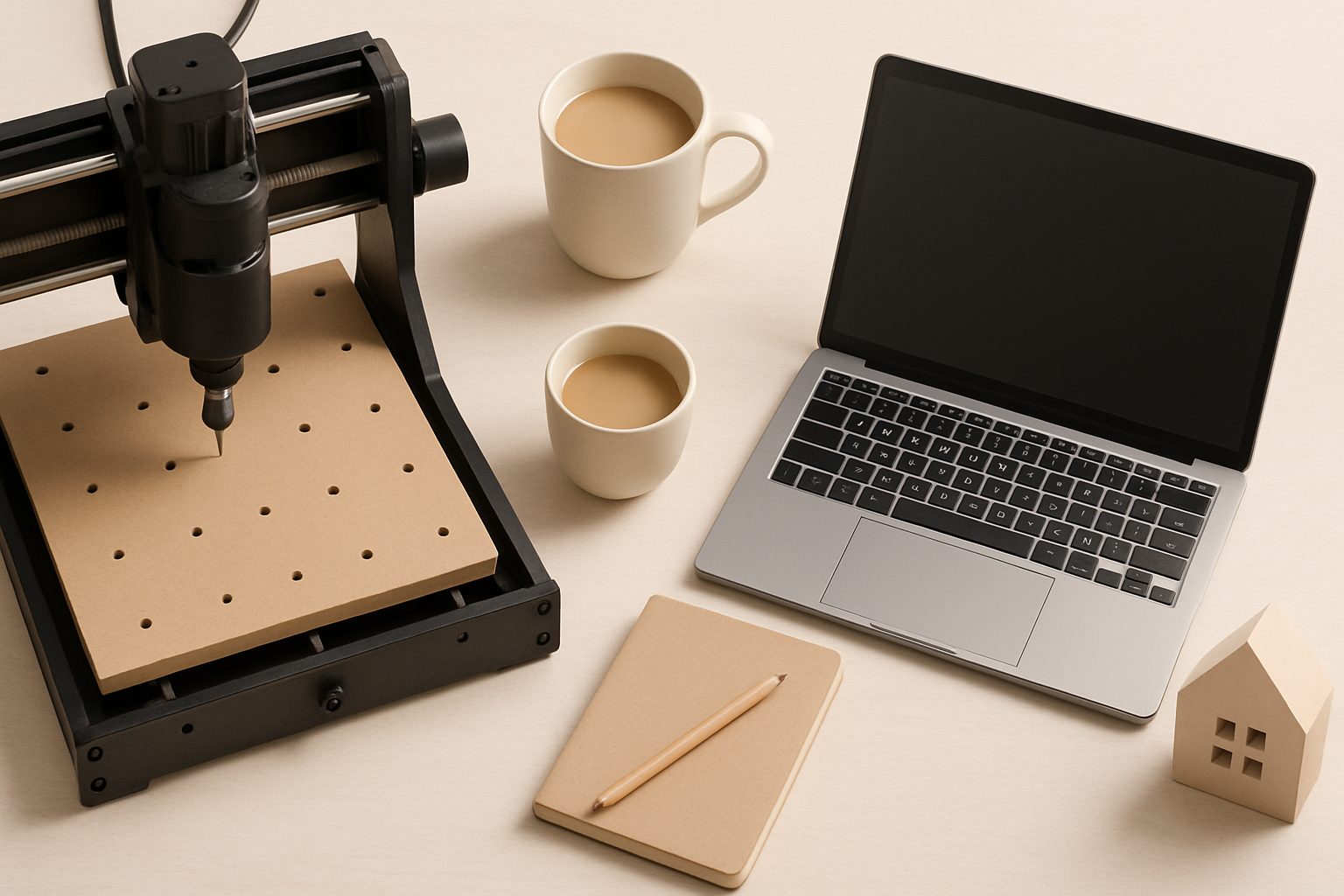
What Can a Home CNC Router Cut? Materials Guide for UK Hobbyists
Home CNC routers have become increasingly affordable in recent years, making them a realistic investment for serious hobbyists in the UK. But before you commit to buying one—or after you've just received yours—the most common question is straightforward: what can it actually cut? The answer matters because your material choice determines the tools you need, the spindle speed settings, the quality of results, and how long your bits will last.
The good news is that most home CNC routers can work with a surprisingly wide range of materials. The limiting factors are usually spindle power, bit quality, and your own patience with setup and tooling. Let's walk through the most practical options for UK makers.
Wood: The obvious choice, but not all woods are equal
Softwoods like pine and spruce are the easiest materials to cut. Home CNC routers handle them beautifully, producing clean edges and fine details. They're cheap, widely available from any UK DIY store, and forgiving if you make mistakes with your feed rates.
Hardwoods—oak, walnut, ash, maple—cut cleanly too, but they're denser and demand sharper bits and slower feeds. If your spindle can handle it, hardwoods produce stunning results with the kind of surface quality you'd struggle to achieve by hand. Expect to spend more on premium cutting bits and be prepared to spend longer at lower feed rates.
MDF is where many home CNC users start, and for good reason. It cuts almost as easily as softwood, creates virtually zero tearout, and is dead cheap (you'll find 18mm sheets at any UK timber merchant for £15–25). The downside is dust—MDF creates a fine, powdery mess that requires good extraction or a sealed collection chamber. It's not toxic in the quantities a hobbyist generates, but you'll want a decent dust extraction system or you'll be cleaning for days.
One practical note: avoid extremely cheap "craft" MDF from supermarkets. It often contains voids and soft spots that produce rough cuts. Mid-range MDF from proper timber suppliers cuts cleanly.
Acrylic and perspex: Precision and polish
Cast acrylic cuts beautifully on a home CNC router with the right setup. You'll get clean edges and transparent results without the crazing or cracking that hand-cutting often produces. The catch is that acrylic melts rather than cuts, so you need sharp bits, high spindle speeds (typically 12,000–18,000 RPM), and rapid feed rates to prevent heat buildup.
Perspex (extruded acrylic) cuts slightly less cleanly than cast, but the process is identical. Both materials create lovely finishing opportunities—you can laser or flame-polish the edges afterward if you want a professional look, though that's beyond the CNC itself.
Cheap tooling is your enemy here. Dull bits will melt and crack the material; sharp bits will produce edges clear enough to use unpolished. Expect to pay a bit more for acrylic-specific bits if you want consistently good results.
Soft metals: Aluminium and brass
"Soft" is the operative word. Your home CNC router can cut aluminium—specifically thin sheet (up to about 5mm depending on spindle power) and soft alloys like 6061 and 5083, which are readily available from UK industrial suppliers.
Brass and copper are cuttable too, though brass produces long, sticky swarf that can jam your spindle if extraction isn't excellent. Brass bits work, but carbide tooling is worth the cost because it stays sharper longer when cutting metals.
Steel and harder aluminium alloys are practically off-limits for home routers without industrial-grade spindles and rigidity. Don't attempt it unless you've got a machine with serious grunt.
Foam: Lightweight but messy
EVA foam, polystyrene, and polyurethane foam cut easily and fast on a CNC router, making them great for prototyping, pattern-making, or costume work. Feed rates can be aggressive, and the process is forgiving.
The downside is that fine foam dust gets everywhere. If you're working with polystyrene, ensure your extraction is working—styrene fumes are unpleasant in enclosed spaces, though hobby-scale CNC work rarely generates enough to be dangerous.
Materials to avoid or approach carefully
Fiberglass and carbon fibre are possible but problematic. They're abrasive (dulling bits quickly), fibrous (creating tearout), and the dust is irritating. If you must cut them, wear a proper respirator and expect to replace bits frequently.
PVC releases chlorine gas when heated, so avoid it entirely on a CNC router. The same goes for anything with unknown composition—if you can't confirm what a material is, it's not worth the risk.
Leather, rubber, and cork can be cut, but they're better suited to lasers. CNC tools tear rather than slice cleanly.
Practical recommendations for beginners
Start with MDF or softwood. Both are cheap enough that mistakes don't hurt your wallet, and they'll teach you how your machine behaves. Once you're comfortable with feeds and speeds, graduate to hardwoods or acrylic depending on what appeals to you.
Invest in decent bits early—a small set of quality carbide tools will outlast cheap alternatives by months and produce better results. UK suppliers like Axminster or local tool shops stock them, though online retailers often offer better prices.
Finally, dust extraction is non-negotiable. Even "easy" materials like MDF will bury your workshop in powder without it. A simple shop-vac with a separator attachment is enough to start, but you'll quickly appreciate a proper extraction unit.
The material possibilities are genuinely broad, but the best one to start with is whatever aligns with your first project and your budget for tooling. Master the basics first—the rest will follow naturally.
More options
- Genmitsu CNC Routers (SainSmart range) (Amazon UK)
- Shapeoko CNC Router & Accessories (Amazon UK)
- CNC Router End Mill & Bit Sets (Amazon UK)
- CNC Spindle Kits & VFD Controllers (Amazon UK)
- BobsCNC Evolution 4 & Accessories (Amazon UK)